
An instructional coach’s tip: Read it exactly as it’s written
By Steve El-Sharawy. Oct 14, 2026.
A Harrisburg instructional coach found that the fastest way to get students writing more was to let them hear exactly what they had put on the page.
Hearing it out loud
“The anonymous factor is what made it safe to laugh and try again.”
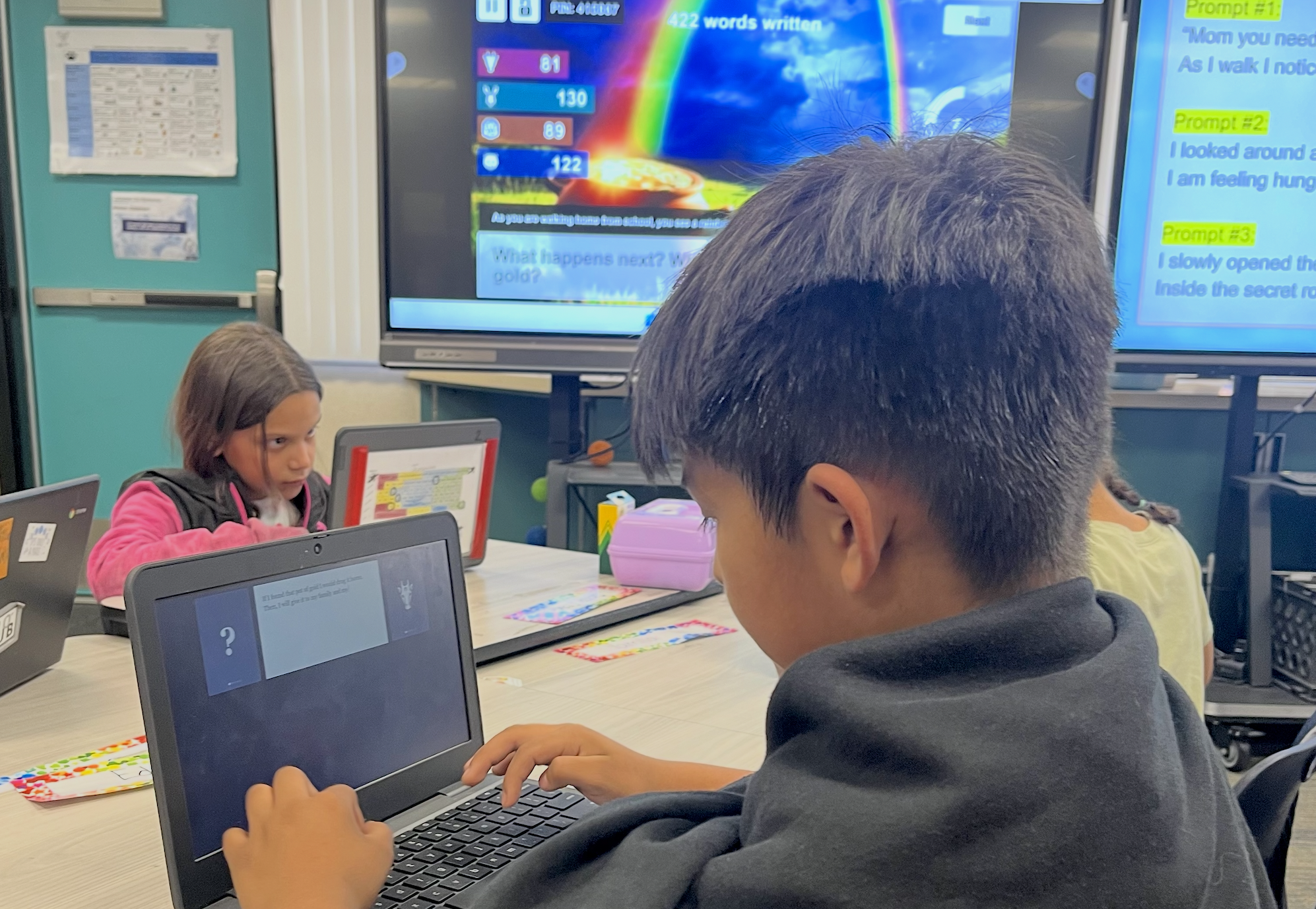
At the end of a WeWillWrite session, the class votes on its favorite entries, and the winners get read out loud. Alicia, an instructional coach in Harrisburg, Pennsylvania, was running sessions alongside a classroom teacher. The rule, they decided, was: "You have to read it the way you see it. Read it exactly as it's appearing." Slang, shortcuts, misspellings and all.
Students knew what it was for, too. "This is not a text to your friends," as Alicia puts it. "We're practicing our writing skills." So when their own casual, text-message writing came back to them out loud, in someone else's voice, it landed. "I wrote this pretty badly," one student admitted. "I think I'm going to try a little harder next time, because that was embarrassing." Because the entries are anonymous to the class, no one was singled out. "The anonymous factor," as Alicia calls it, is what made it safe to laugh and try again.
"It actually worked to motivate them," she says.
Writing had slipped to the back burner
Harrisburg’s classrooms are some of the most linguistically rich anywhere: more than 25 different languages are spoken within the school district. Teachers there have a variety of resources to draw on, but writing itself had drifted out of focus, in a landscape where, as she puts it, "there's not a lot of schools that have writing curriculums anymore." Plenty of her students could hold their own in any conversation, then froze the moment they had to put words on a page.
After 14 years as a virtual educator, Alicia now works with both virtual and in-person students within the Harrisburg school district, and this year she made one idea her mission: purposeful technology, the kind that lifts what a teacher is already doing instead of just digitizing a worksheet. "I saw it on TikTok, believe it or not," she says. She went to the website, and the next day she filmed her own video offering to come in and model WeWillWrite for any teacher who wanted to try. Within a day she was in a fifth-grade classroom. Within weeks she was in fourth, sixth, and seventh grade classrooms too.
Alicia found the trick that got students writing more and better.
From one sentence to full paragraphs
“The jumping from just one or two sentences to full-blown paragraphs was amazing to see from these kids who are very low”
"They were cheering and chanting for another round," Alicia says. "It was wild." Students who had been turning in one or two sentences were writing full paragraphs within a few months. "The jumping from just one or two sentences to full-blown paragraphs was amazing to see from these kids who are very low," she says. They started asking for it every Friday, and then more often than that. It was never a reward. It was them choosing to write more.
For teachers, the change was just as real. None of it replaced the teacher. "It really just takes a load off of a teacher's shoulders," Alicia says, and "it just gives the teacher some time back." The feedback shows what each student needs to work on next, instead of leaving a teacher with a stack of writing to sort through alone. Writing was back at the center of the room.
"I would love to scream it to the rooftops"
Months in, what Alicia talks about is not the platform. It is the kids. "I would love to scream it to the rooftops," she says. "That's how much I love it." Her district gives teachers plenty of options, and from what she has seen, one verdict stands: "Nothing has topped WeWillWrite when it comes to writing in the classroom."
Get students started faster
Less hesitation. More participation. Stronger writing routines.
