
From hesitant writers to confident authors: A 4th grade classroom transformed
When writing growth becomes universal
Teaching and inspiring children to write has been my favorite part of being an educator for the last 20 years. When I think back to the young writers that I have impacted most, there is a small handful that truly stand out.
Or at least that was the case before WeWillWrite became the most valuable tool in my teaching toolkit.
I would not be able to narrow it down to one or two students if I wanted to say who has shown the most growth in both their writing abilities and love of writing over the last year and a half that I have been using WeWillWrite with fidelity in my classroom. Instead, I can confidently say that every single one of my students who has played WeWillWrite has become an enthusiastic, confident, successful, and proud writer.
Students who ask to write more
“The kids not only love it because it is so much fun, but also because they are constantly blown away by their own growth.”
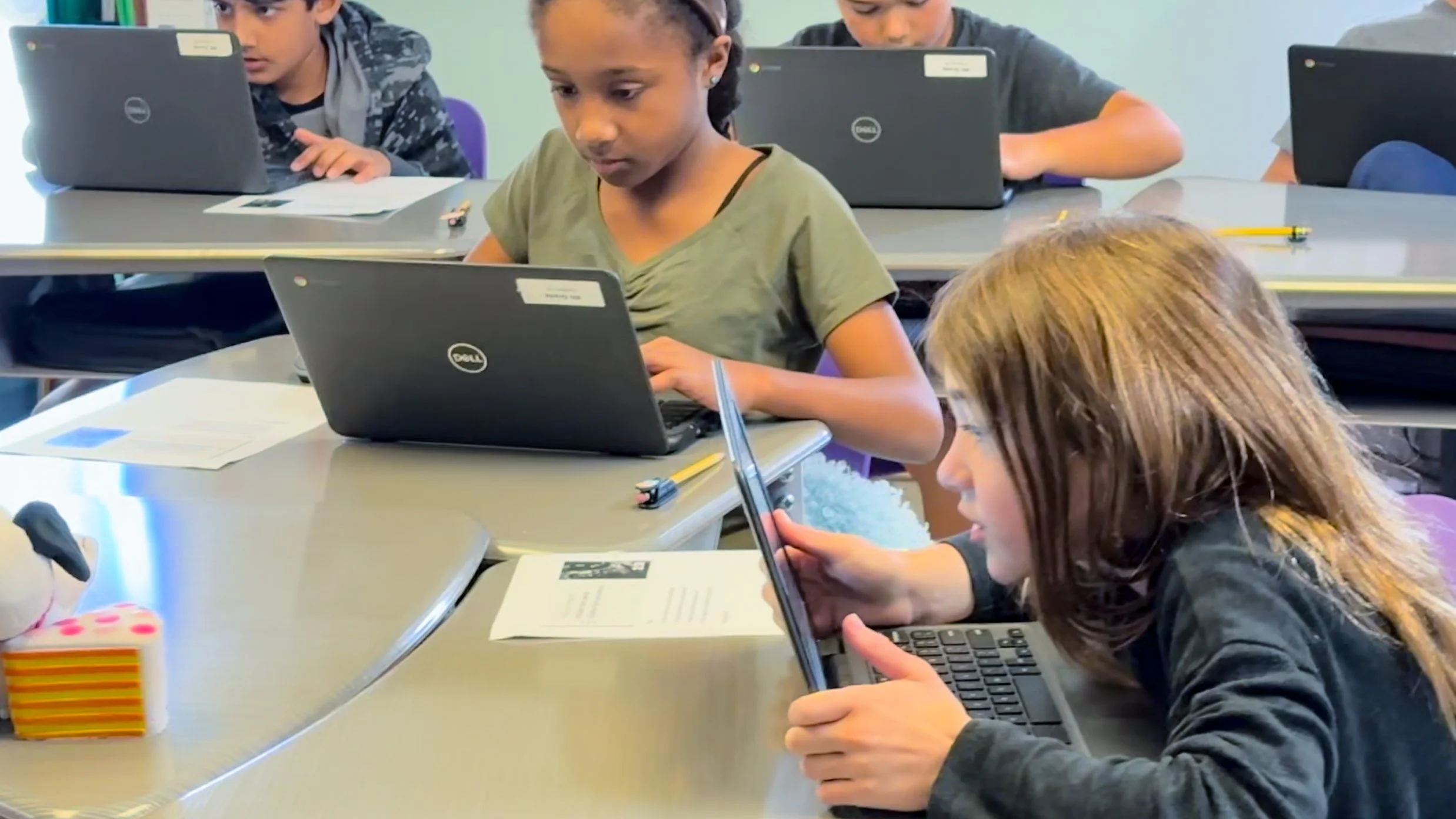
When I greet my 4th-grade students at the door to my English classroom each day, the first words I hear are usually, “Do we get to play WeWillWrite today?”. If my response is yes, they practically knock me over, rushing into the room to grab their computers.
My students from last year pop their heads in the room almost daily to see if this year’s students are as lucky as they were last year. The kids not only love it because it is so much fun, but also because they are constantly blown away by their own growth.
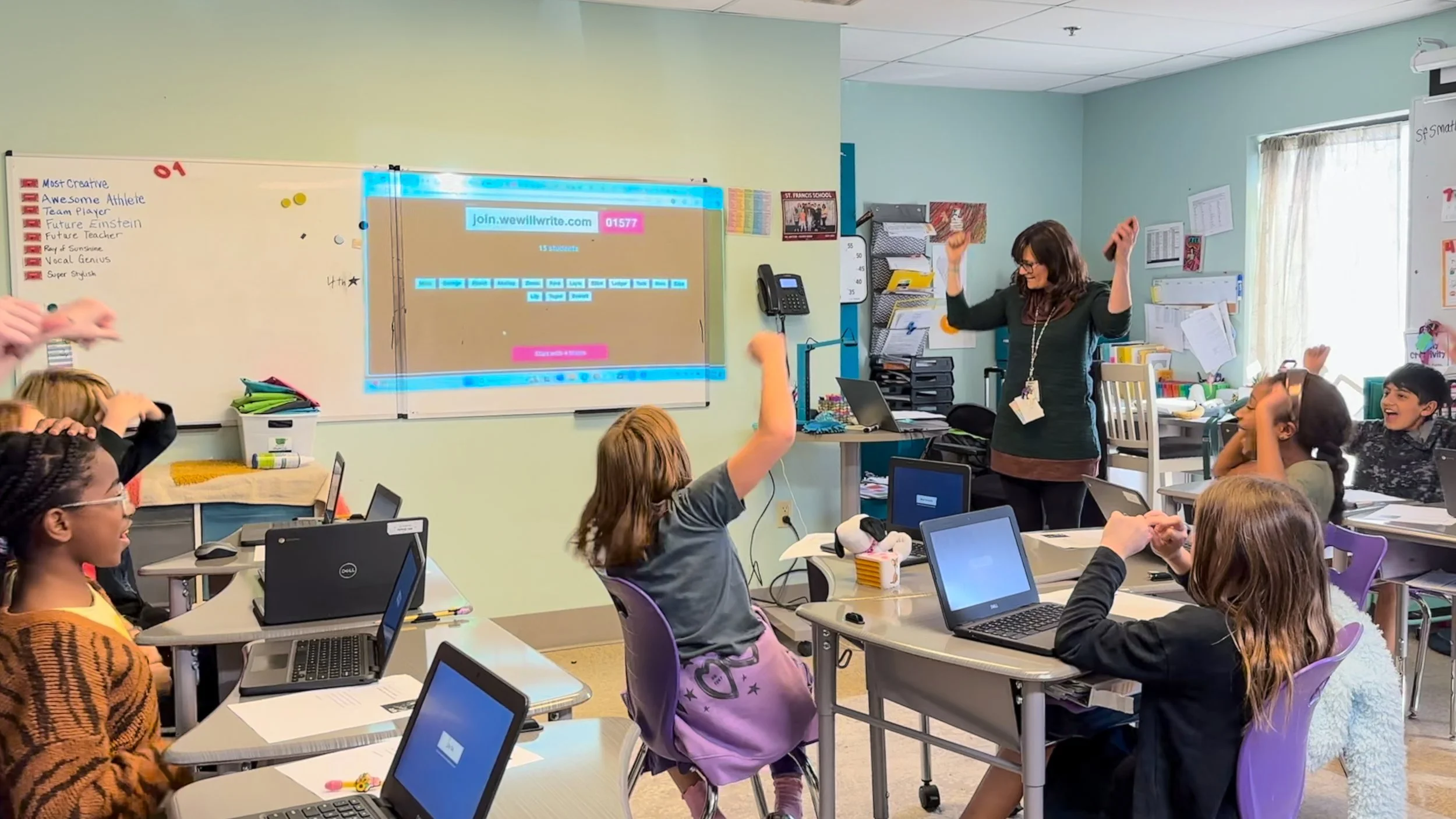
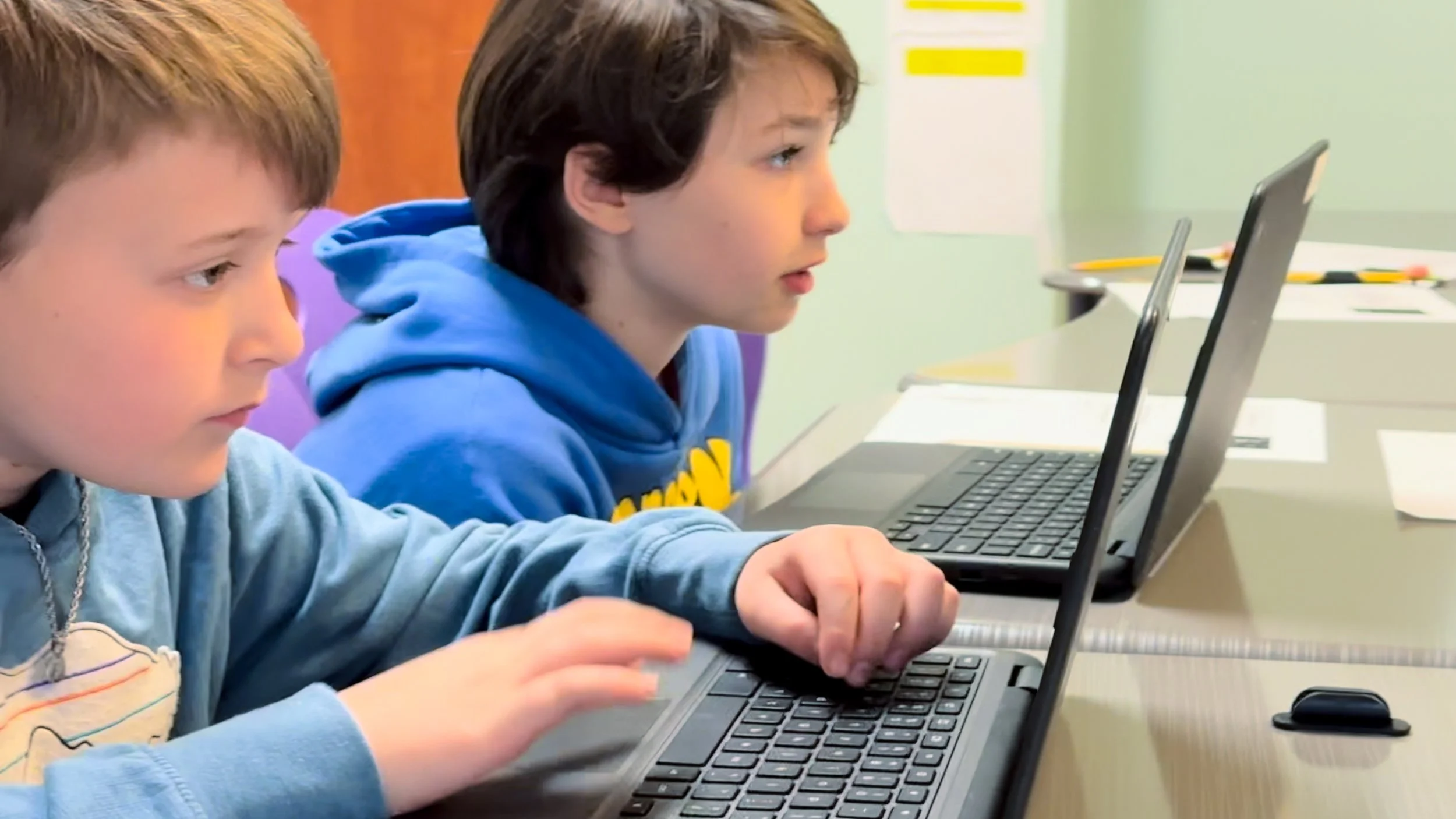
The students’ response when we start a WeWillWrite session.
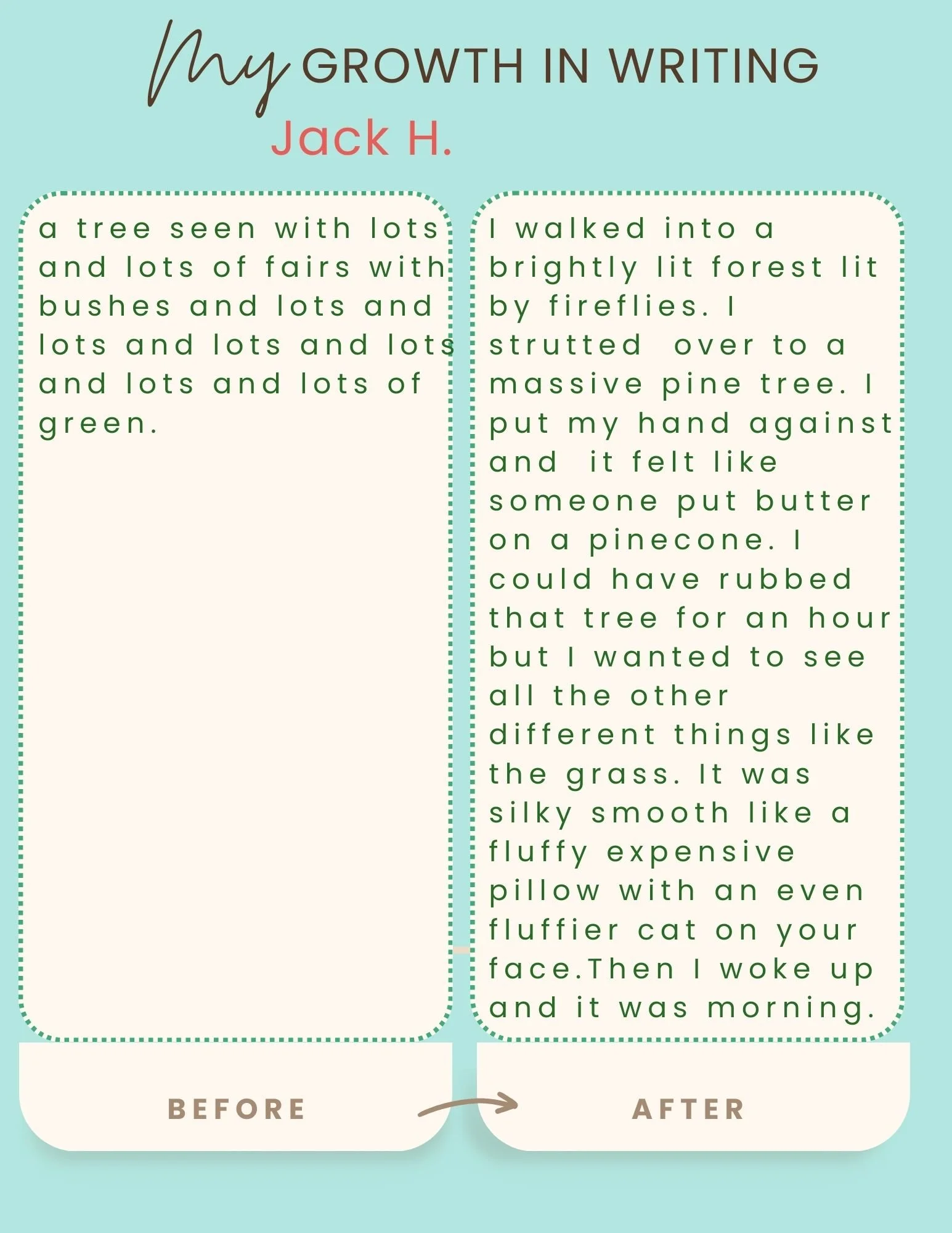
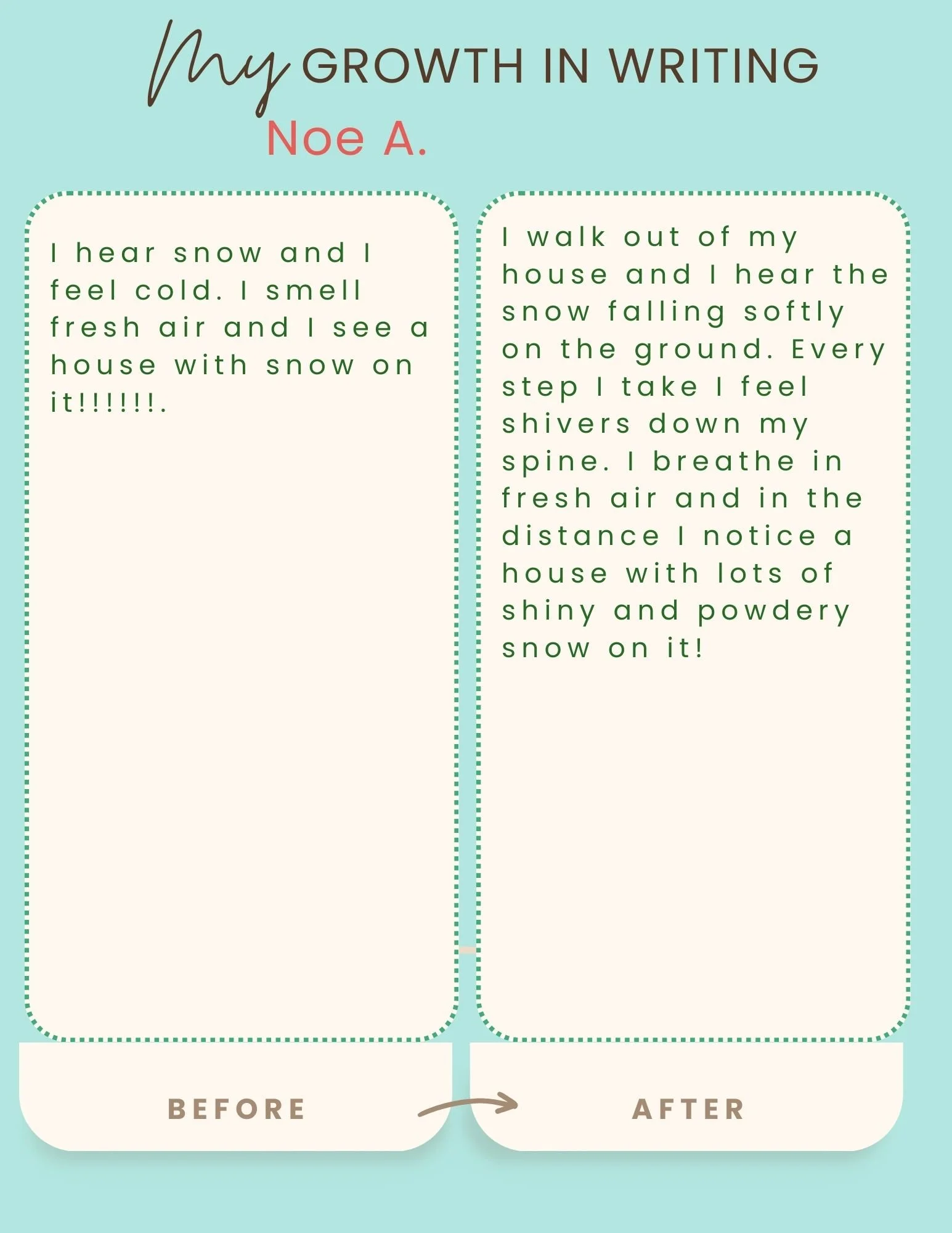
Before and after writing samples
One of the most powerful ways I’ve seen this growth come to life is by using the exact same WeWillWrite prompt at the very beginning and at the very end of the school year.
When students place their two writing pieces side by side, the difference is undeniable. Because a fundamental part of using WeWillWrite to teach writing skills involves rich class discussions all year, the students are able to read both pieces of writing and explain what they did to strengthen their final version.
Below are three examples of my students’ before-and-after texts, answering the same prompt both times and with the same amount of time to do so.

Show students their own growth
More confidence. Stronger discussion. Clearer writing progress.
When families see the impact firsthand
If it sounds too good to be true, then I implore you to experience it yourself. I have tried to get my students’ parents excited about the changes they will see in their child’s writing skills, but it wasn’t until I had the opportunity to invite parents and grandparents to participate in a game with their children recently that they truly understood what I was raving about.
The families were actually crying and hugging me and promising to call their universities to tell them they needed to start teaching future teachers to use WeWillWrite because that is how powerful and engaging this writing tool is.
Building a community of writers through feedback
“It is a foundation for building a community of writers who support, inspire, and learn from one another.”
WeWillWrite is so much more than a game, more than a mode of instruction, more than a lesson plan; it is a foundation for building a community of writers who support, inspire, and learn from one another.
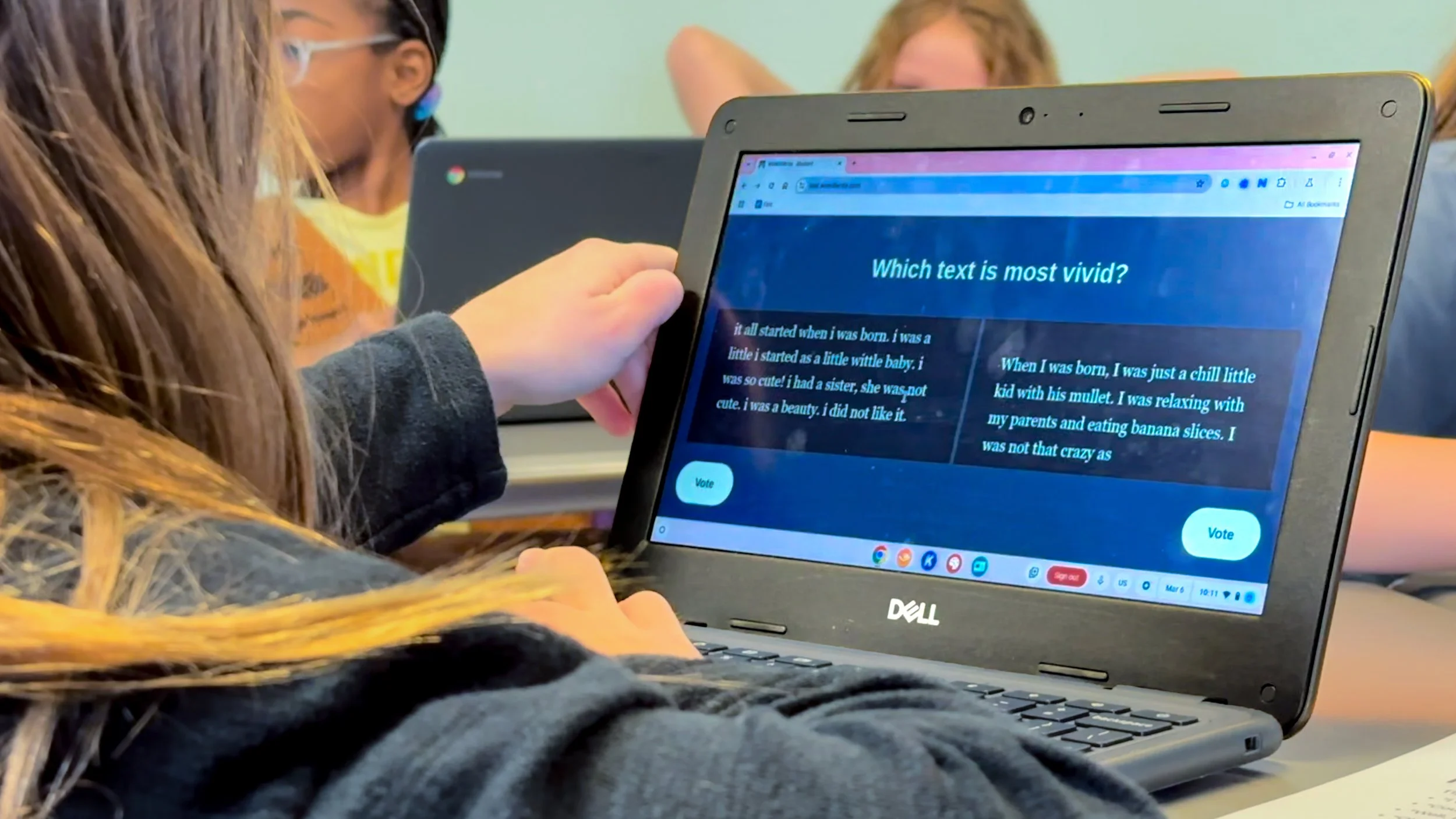
When a class has played several games, you really start to see the discourse about the substance of their writing blossom. They are seeing many different examples of strong writing and learning how to analyze what makes their writing stand out. The AI tools that identify literary devices in each piece of writing give teachers a starting point for introducing all sorts of skills, such as figurative language, foreshadowing, cliffhangers, word choice, and so much more. When the first round is over, if something stands out like weak topic sentences or not enough variety in sentence structure, all I have to do is mention it, and on the next round, the entire class will have improved on that point.
I can not stress enough that growth like this did not happen when we simply shared our writing and moved on to listen to the next student read theirs. It did not happen when I filled out a rubric telling them what to improve in future assignments, and it did not happen when I met with students one-on-one to analyze their writing. WeWillWrite makes the growth happen instantly, constantly, and profoundly.
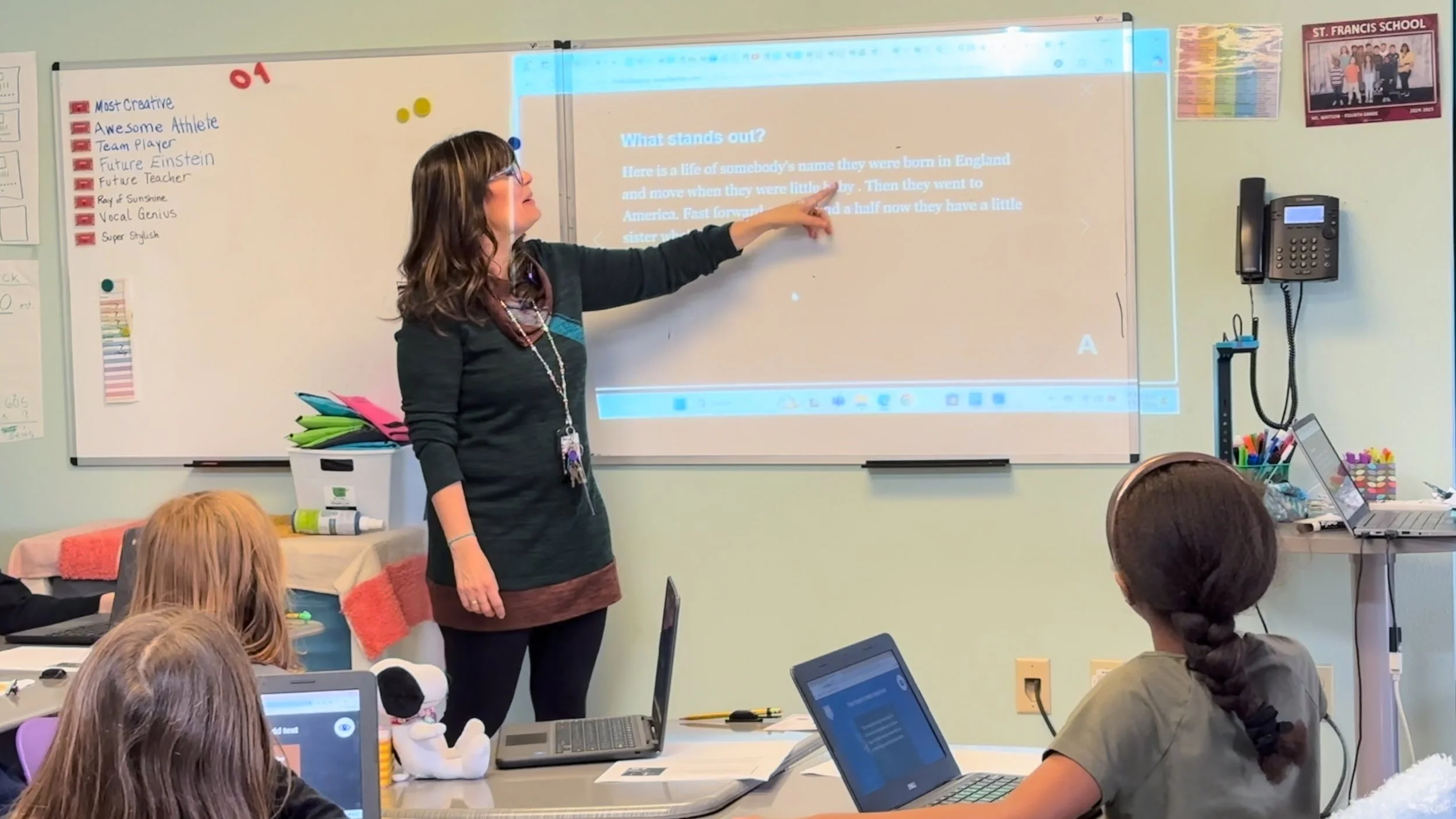
With WeWillWrite, the feedback is instant and the students support each others’ growth by discussing writing together.
Engagement, accessibility, and real growth for every learner
“There are so many new tech platforms on the market today (…). None of them can compare to WeWillWrite when it comes to student engagement, buy-in, feedback, and growth.”
There are so many new tech platforms on the market today, and they all have unique values that they add to the classroom. However, none of them can compare to WeWillWrite when it comes to student engagement, buy-in, feedback, and growth.
Voice-to-text capabilities have made my students with dyslexia emerge as some of my strongest writers for the first time in their lives. Students who thought they didn’t like to write or couldn’t write now feel it is their favorite subject. Teaching writing can be an abstract and challenging concept, but WeWillWrite has made it accessible and meaningful for all students and for teachers.
I’m not the only one who has seen this shift. Many other teachers at my school are choosing to use WeWillWrite to support student thinking and writing, even in subjects like history and science. The impact has become visible at a broader level with both our Head of School and learning center teachers, who work with the students who require additional academic support, noticing and praising the growth they have witnessed from my writing students.
“The biggest change I’ve noticed since using WeWillWrite is buy-in. Students are showing up eager to write, and they’re frustrated when they have to miss class. When kids are choosing writing because they enjoy it, you know something is working.”
— Emily Vitris, Head of School
“WeWillWrite has been a game-changer for our 4th-grade ELA classes. Students are genuinely excited about writing and actually look forward to it. That's rare! Our school serves a number of neurodiverse learners, and writing instruction has historically been challenging with our population. It has strengthened our overall support system by allowing reluctant writers to remain in class with their peers, instead of being pulled for intervention. Students leave Bonnie’s class as more confident and capable writers, and they have a ton of fun in the process. You can't ask for more than that!”
— Jenny Jones, Learning Center Coordinator.
A breakthrough moment for a reluctant writer
“He spent all summer writing book 2 and couldn’t wait to come back to show me.”
Last year, I had a student on an IEP who had it written in his accommodations that he should not be asked to read his writing out loud, should have someone scribe for him, and should be allowed to turn in shortened writing assignments. He was very vocal about telling us when he was bored with a topic, how much he hated writing, and how ELA was the subject he disliked the most.
When we started playing WeWillWrite, he discovered that the class thought he was the most creative writer in the group, and began winning challenges nearly every time we played. He ended up loving a story he started through a WeWillWrite prompt so much that he spent all summer writing book 2 and couldn’t wait to come back to show me.
He wrote me a note at the end of the year telling me that he used to hate writing but that he loves it now because of me and WeWillWrite. I think I can safely say, it really was mostly WeWillWrite that worked the magic on him.
Why going back is no longer an option
“You can’t witness your students finding this level of passion for writing and then go back .”
Someone recently asked me what it would be like if I suddenly didn’t have WeWillWrite in my class anymore. That is just not a break-up I could ever recover from.
You can’t witness your students finding this level of passion for writing and then go back to writing standard journals and essays. WeWillWrite is a game-changer for writing instruction, and any classroom not playing it is missing the chance to cultivate a classroom of successful and inspired writers.
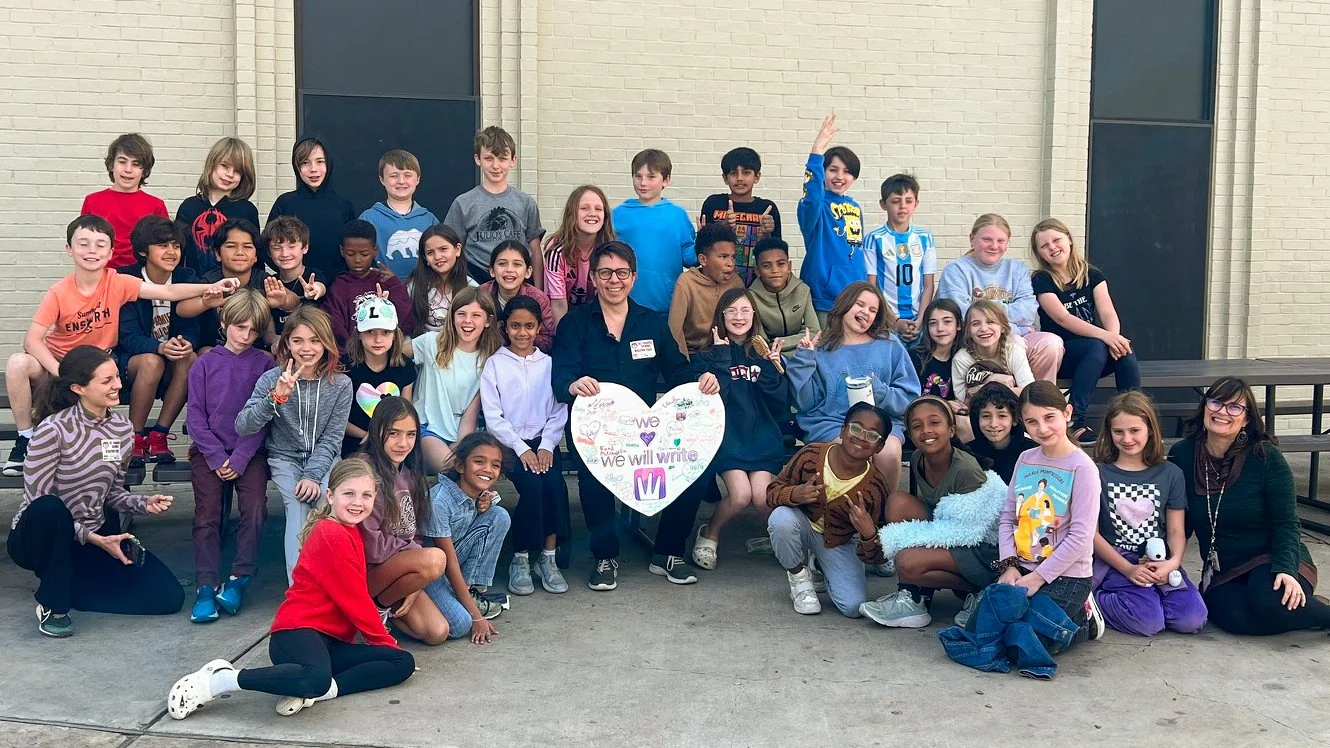
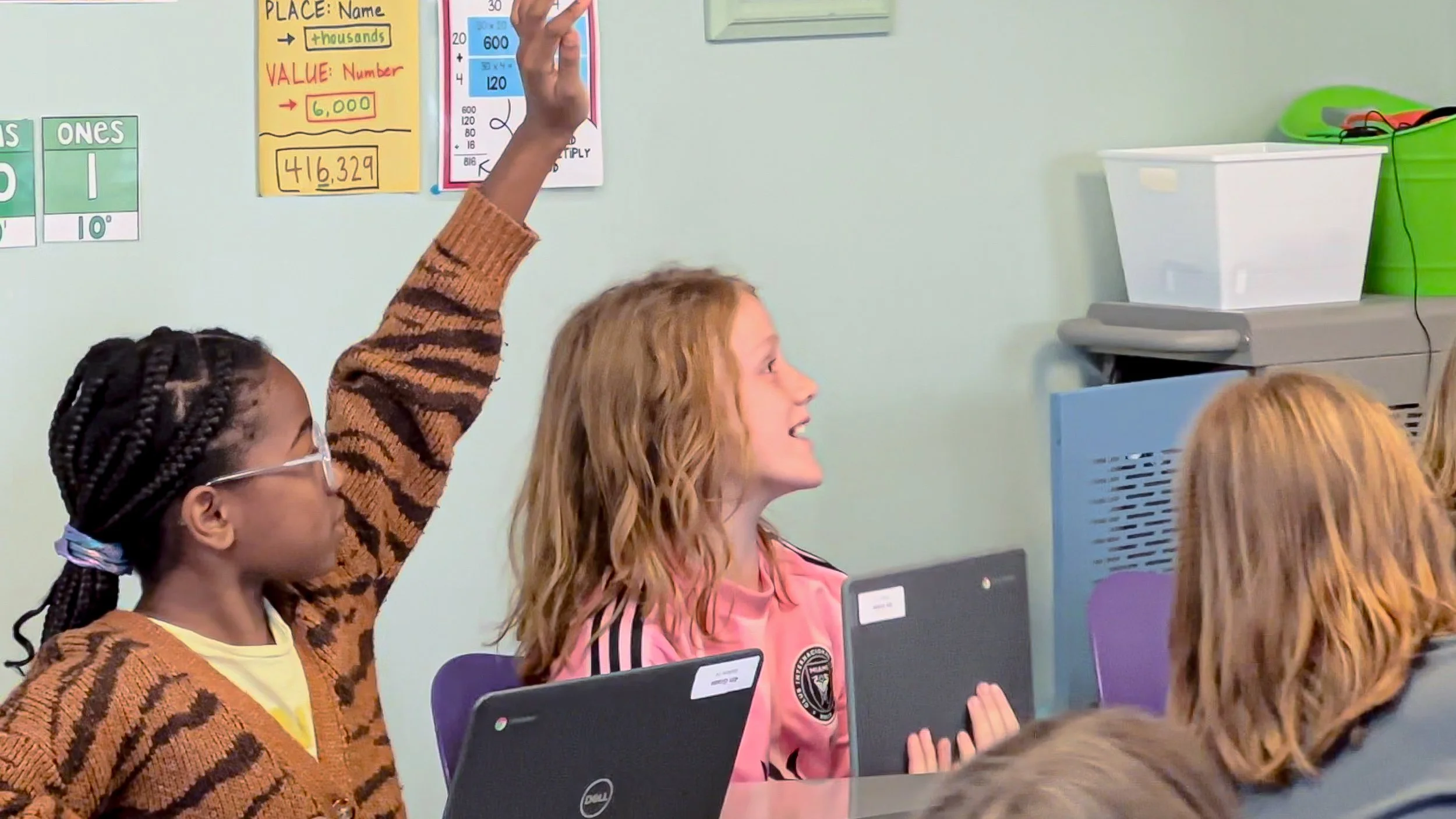
Our community of writers: My 4th grade ELA class when WeWillWrite Founder Daniel Senn visited. My students gave him a heart and letters they had written to him about how much they love WeWillWrite.
Want to build a stronger writing culture?
For school or team access, request a quote or book a short meeting.
