
WeWillWrite under New York City's AI and screen-time policy
By Steve El-Sharawy and Morgan Boeger.
Sept 9, 2026.
In short: Students on WeWillWrite write, read each other's work and vote. They never prompt or chat with AI, and they receive no AI feedback, scores or grades. AI appears in two places: Teacher Insights, a review page only the teacher sees, and bot players that fill empty seats in classes under nine. Student writing used for insights is sent without names and is never used to train models. For classes of nine or more in grades 3 to 8, we believe WeWillWrite is consistent with the policy.
What the policy says
On September 2, 2026, New York City set a one-year moratorium for the 2026-27 school year on student-facing generative AI in grades 2-K through 8. This includes tools such as chatbots and tutors that respond to student prompts. High school use is limited to approved pilots and career-readiness programs, while necessary accessibility tools remain available. Teachers may use approved AI for planning and operational tasks, but not for grading, behavior monitoring, special education documents, mental health support, or decisions about students.
The policy also recommends no individual-device time in preschool through second grade, no more than 30 minutes a day in grades 3–5, and no more than 45 minutes in grades 6–8. Screen-time exceptions include assistive technology, assessments, out-of-school learning, and centrally approved instruction
What WeWillWrite is
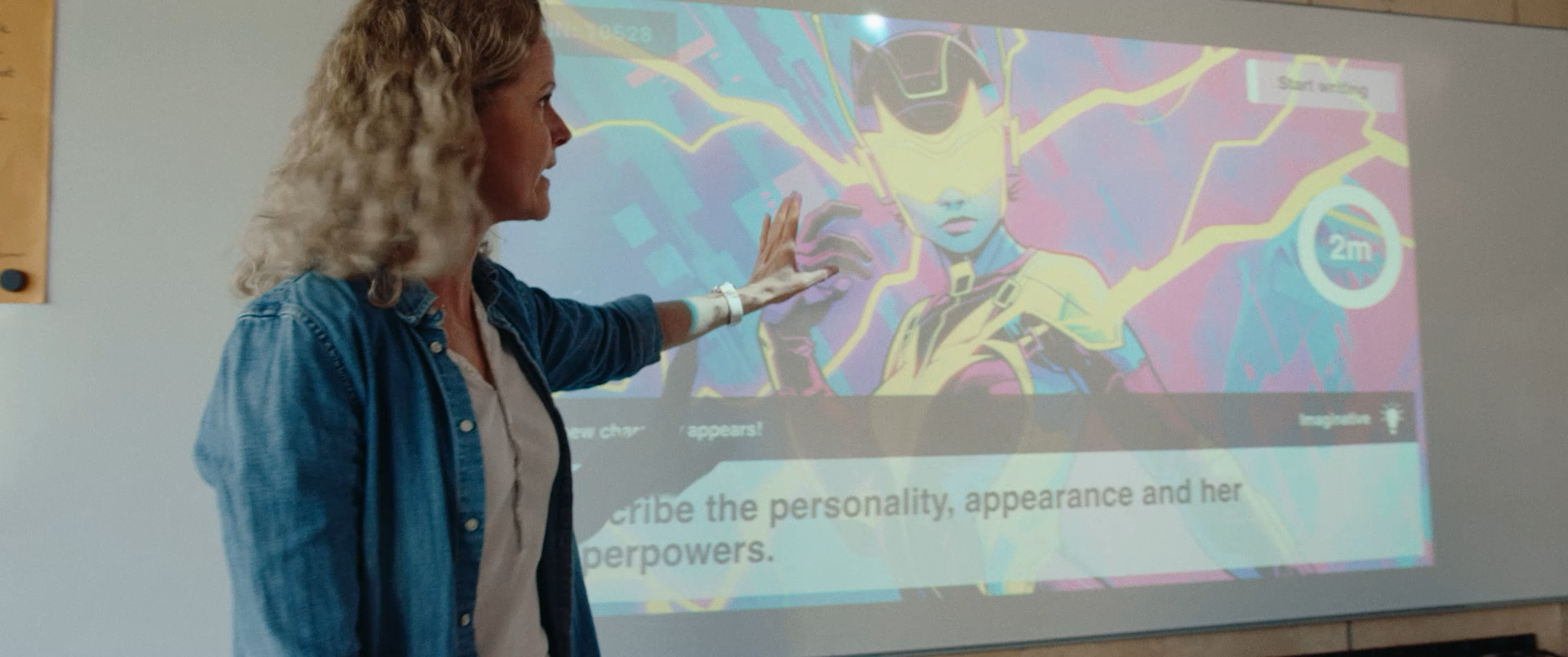
WeWillWrite is a live, teacher-led writing platform. The teacher chooses a prompt and starts a session. Students join on their own devices with a PIN and their name, with no student accounts.
In each round, students write a short response, read anonymous entries from teammates, and vote for the text that best meets the criteria. The class then reviews the top-voted texts together on a shared screen, with the teacher leading the discussion.
Students do not prompt or chat with AI during this process, and they receive no AI-generated feedback, scores, or grades.
Where AI appears in WeWillWrite
Teacher Insights is a session review page for the teacher. After a session, it highlights literary devices and writes short notes for the teacher about what worked. A teacher may show a highlighted text to the class during discussion. It does not grade students, rank them, or make decisions about them.
In the event the class is very small (under 9 players), bot players fill empty seats. These computer players generate responses to the prompt. Students may read those responses but cannot prompt or chat with them.
To generate these highlights and notes, WeWillWrite sends student writing to a third-party AI provider. The prompts do not include student names or school names. Neither WeWillWrite nor its AI providers use teacher or student information to train AI models. Student writing remains part of the education record under the school’s control.
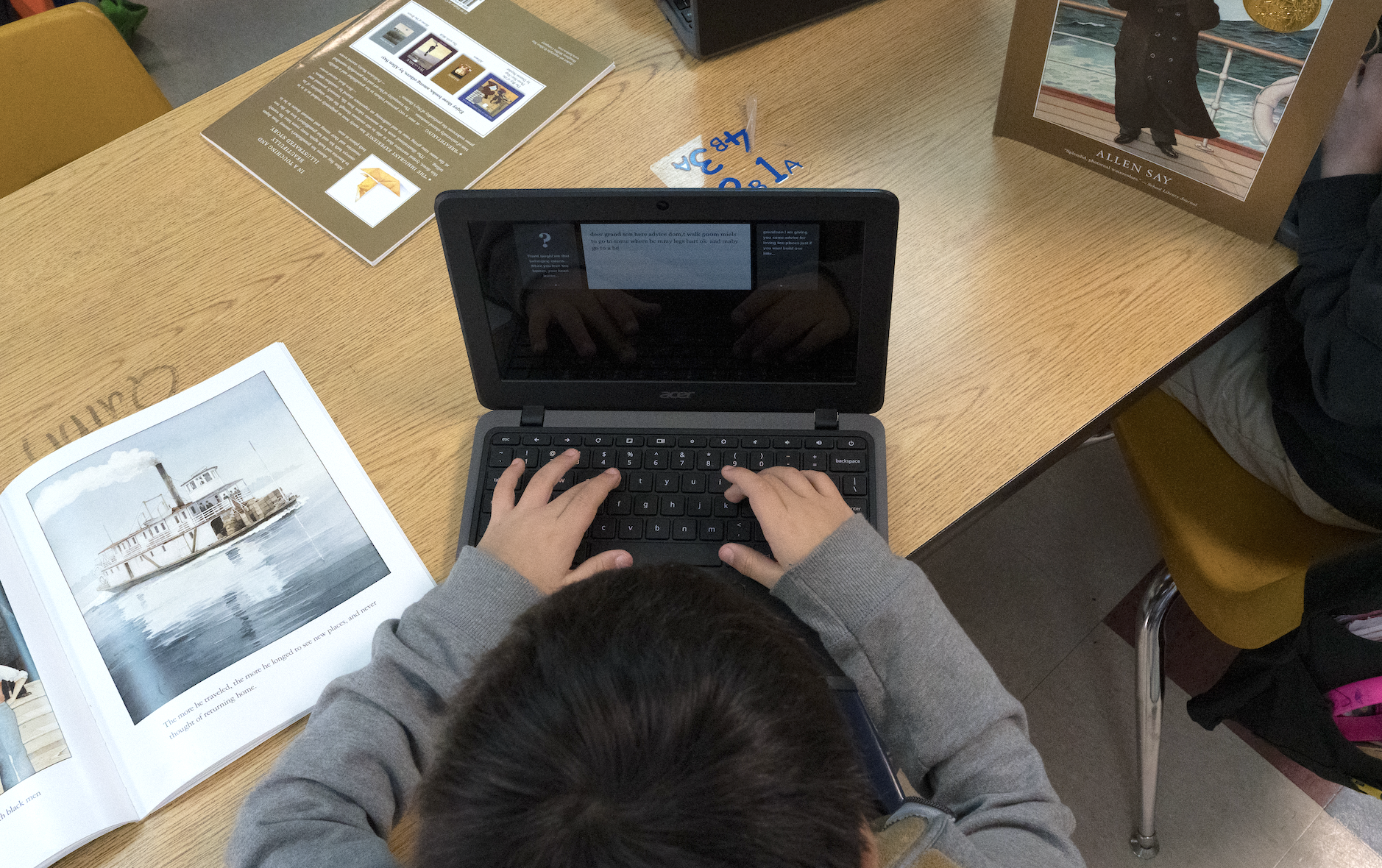
A student responding to a WeWillWrite writing challenge. Students never prompt or chat with AI, and they receive no AI feedback, scores or grades.
Screen time and where it fits
Because students write on individual devices, the grades 3-5 and 6-8 recommendations apply.
The teacher controls how much of a session runs on those devices: writing runs about three to four minutes per round, the teacher chooses how many rounds, and closing discussion happens together on the shared screen.
In preschool through second grade, where the policy recommends no individual-device time, WeWillWrite does not fit the individual-device model.
For New York City teachers and principals
For classes of nine or more students in grades 3 through 8, we believe WeWillWrite is consistent with the policy: students do not prompt AI, receive AI-generated feedback directly from the platform, or see bot text.
Schools can review our data practices and find their state’s DPA on our Privacy and Security Overview, or reach out to privacy@wewillwrite.com with any questions.
Sources:
New York City Public Schools. “Guidance on Artificial Intelligence (AI) and Screen Time.” New York City Public Schools, 2026.
NYC Mayor’s Office. “Mayor Mamdani and Chancellor Samuels Put Students First with Nation’s Broadest Generative AI Moratorium in Schools.” City of New York, 2 Sept. 2026.
Elsen-Rooney, Michael, and Alex Zimmerman. “NYC’s New School AI Ban Explained: What’s Changing? What’s Still Murky?” Chalkbeat New York, 2 Sept. 2026.
